


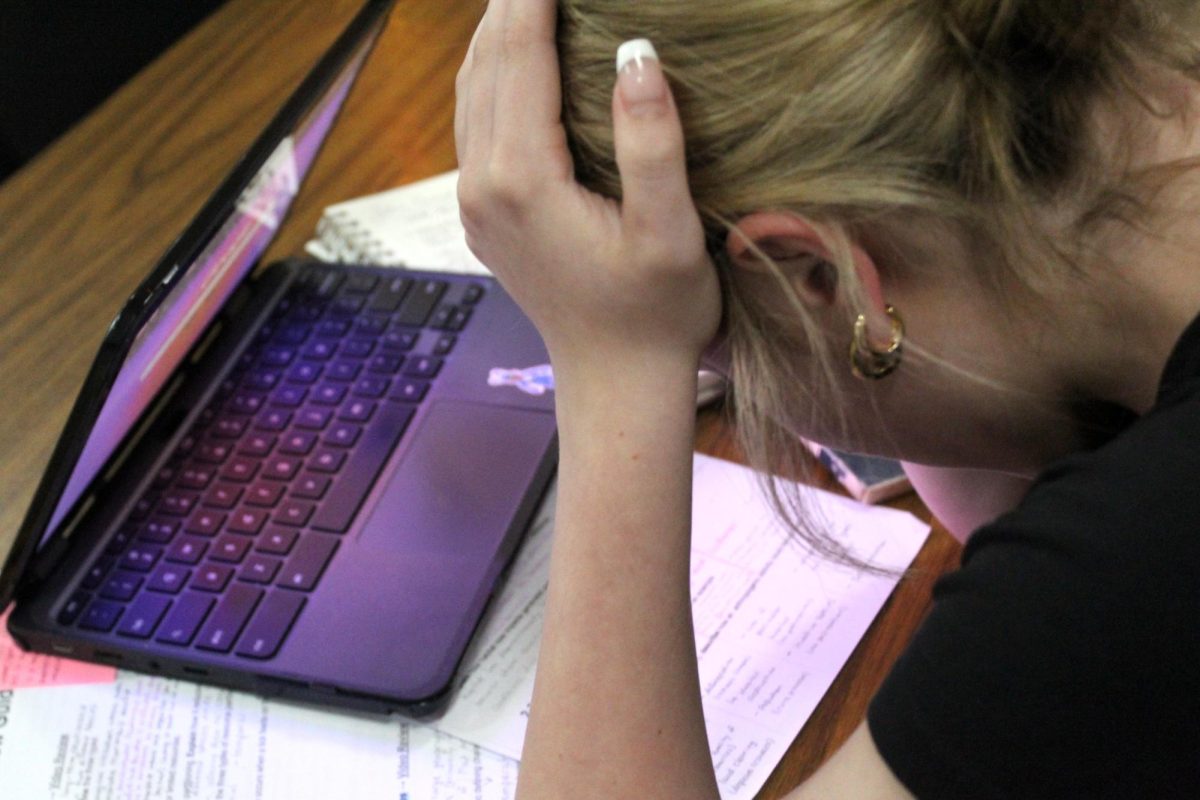
As the school year nears its close, even teachers are slightly burnt out and are pushing out everything they’ve got left. An MCHS student uses their AIM period to organize their workload in their agenda. Two assignments due for their first period, study for an exam in their second, two more assignments in third, and an eight-page essay in fourth. They think, This is only half my day?’The student workload has become far too much, even without extracurriculars.
Students and teachers at MCHS are now hitting the slump of the second semester. Most students are drowning in assignments from their classes. Trying to comprehend and balance the different teaching styles to complete their work, they keep finding themselves lost and therefore give up.
From teachers giving out more and more work to cram in before the school year ends, to teachers just having work days to prepare for upcoming finals, the modern high school experience requires us to adapt to wildly different teaching styles constantly. It creates a disjointed learning environment that directly hinders our academic success.
On any given day, a student shifts from a lecture-heavy environment to a self-guided digital environment, and then a high-stakes testing environment. When teachers operate in their own bubble without coordination in their methods or expectations, students spend more time and energy figuring out how an individual teacher wants something done rather than actually learning the material.
Inconsistent teaching frameworks and a lack of predictable classroom structures can lead to a student feeling burned out. This could cause those students to feel disconnected and far more likely to check out entirely before the final bell rings.
This structural disconnect can get worse by an unsustainable daily workload. The current system completely ignores a student’s life outside of the classroom.
The standard expectation of hours of nightly homework per class fails to account for the extracurricular activities, sports, and part-time jobs that are necessary for college applications and personal development. When every individual teacher assigns work as if their class is our only priority.
A Stanford University study confirmed that excessive homework loads fail to improve academic performance past a certain point. Instead, they actively compromise a student’s ability to balance their developmental needs, hobbies, and family life.
Some may think that immense workloads and stress go hand in hand with high school. Assuming you can’t have one without the other. While sometimes it may not appear mentally taxing, the numbers prove otherwise. According to the American Institute of Stress, “70% of U.S. teens (ages 13-17) identify anxiety or depression as major issues among their peers.”
As students flood out of Upper Campus and make their way home. They drive down Crystal Lake Road with a sense of urgency. In order to make it home in time to do all their homework and then make it to practice, and then Key Club, they need as much time as possible.