


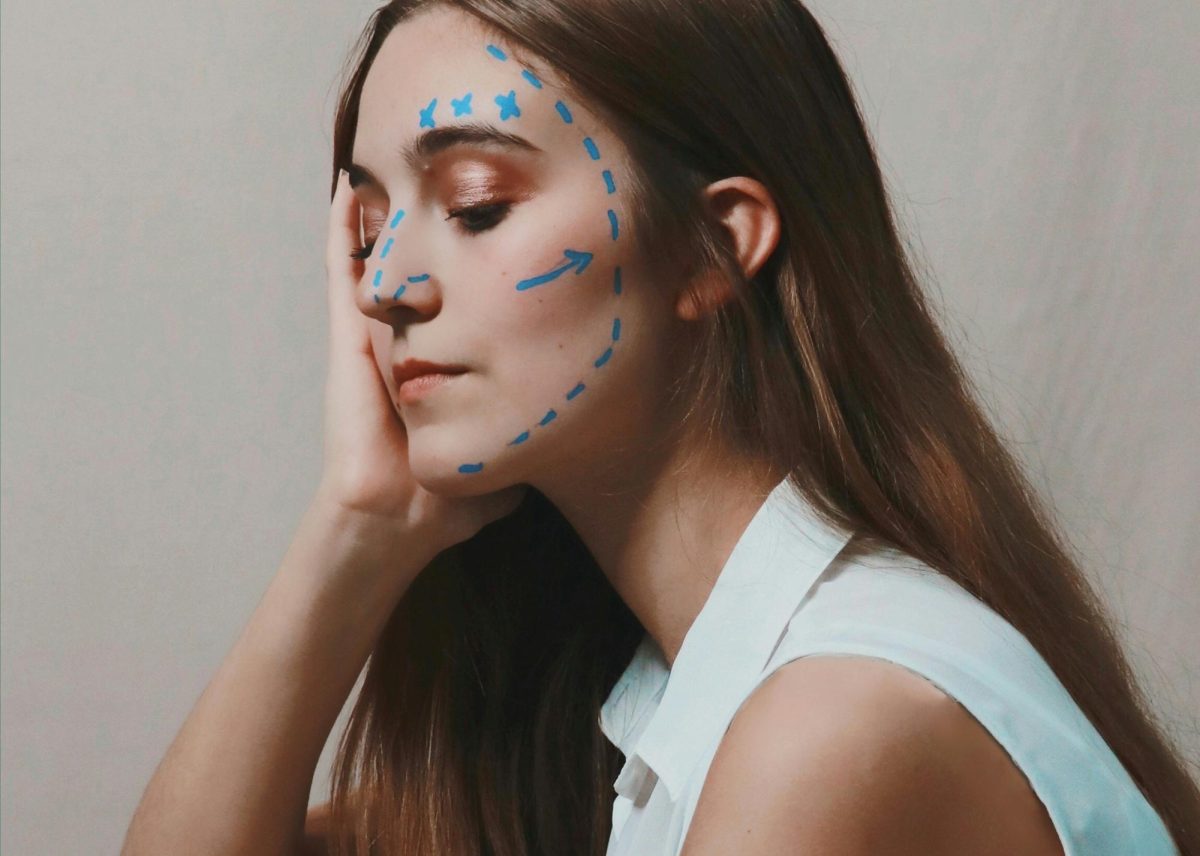

While watching celebrities walk the red carpet at the Grammy’s, everyone looks flawless. You would think that’s a good thing, that it means they feel confident and happy to be there, but think to yourself. In the past decade, the faces you see online have all begun looking the same: full lips, defined cheekbones and a sharp jawline.
Society seems to have mixed opinions on cosmetic procedures.
If someone has too much plastic surgery, they are fake and out of touch with reality, but if someone doesn’t have enough work done, they are unattractive and plain. Although this is the harsh reality of society’s judgement, the subject goes further than who has too much or too little work done.
Beauty standards are a concept that has grown and changed with society. As plastic surgery procedures have gained popularity, the standards for beauty have completely transformed.
Celebrities who are altering their appearance through plastic surgery are causing beauty standards to become unreasonable. From celebrities like the Kardashians, who have had obvious surgery, to celebrities like Taylor Swift, whose work is less noticeable, the audience of pop culture is being affected by this matter more than people realize.
In a study by PRS Global Open, 48.5% of people who completed questionnaires felt influenced by social media to consider getting cosmetic procedures.
“I think it’s a perpetuation of beauty standards that is unattainable for people who aren’t in the same market,” senior Ayomide Adetowoju says, “people shouldn’t have to get work done to feel comfortable in their body.”
The observers of the media aren’t the only people affected by beauty standards.
Celebrities who go on red carpets, attend the Grammy’s and go on tour are constantly being evaluated and judged by the public. It is no surprise that these celebrities face criticism for their appearance alone.
Celebrities are affected by plastic surgery in the same way that the observers of pop culture are.
According to People Magazine, while exclusively talking with actress Julia Fox, she expressed that she wishes more women would be honest with their procedures, because they set an unrealistic bar for other women. Fox also brings up the girls who might be comparing themselves to these women.
“That’s really great for you,” Fox says, “but what about all the girls that are so impressionable and feeling like ‘wait, why don’t I look like that and what’s wrong with me?’”
A common misconception is that celebrities are the sole people to blame for unrealistic beauty standards, but apps like TikTok and Instagram are key places where these standards are created.
The TikTok algorithm consistently circles through different aesthetics referring to makeup styles that mainly capture the attention of teen girls.
From the clean girl aesthetic, a dewy makeup look with glowy skin, to the Y2K aesthetic, a glossy lip and glitter, these looks gain popularity from the media, and influence viewers to adopt them.
According to a study conducted by researchers at the Boston University Chobanian & Avedisian School of Medicine, they recognized that the number of hours patients at a dermatology clinic devoted to using Snapchat and Instagram held a crucial difference in the view that social media influenced their desire to undergo a cosmetic procedure.
While teens scroll more and more, these aesthetics become the standard.
In a world obsessed with manufactured beauty, remember that reverting to the media-driven ideals would make you just as simple as everyone else.