


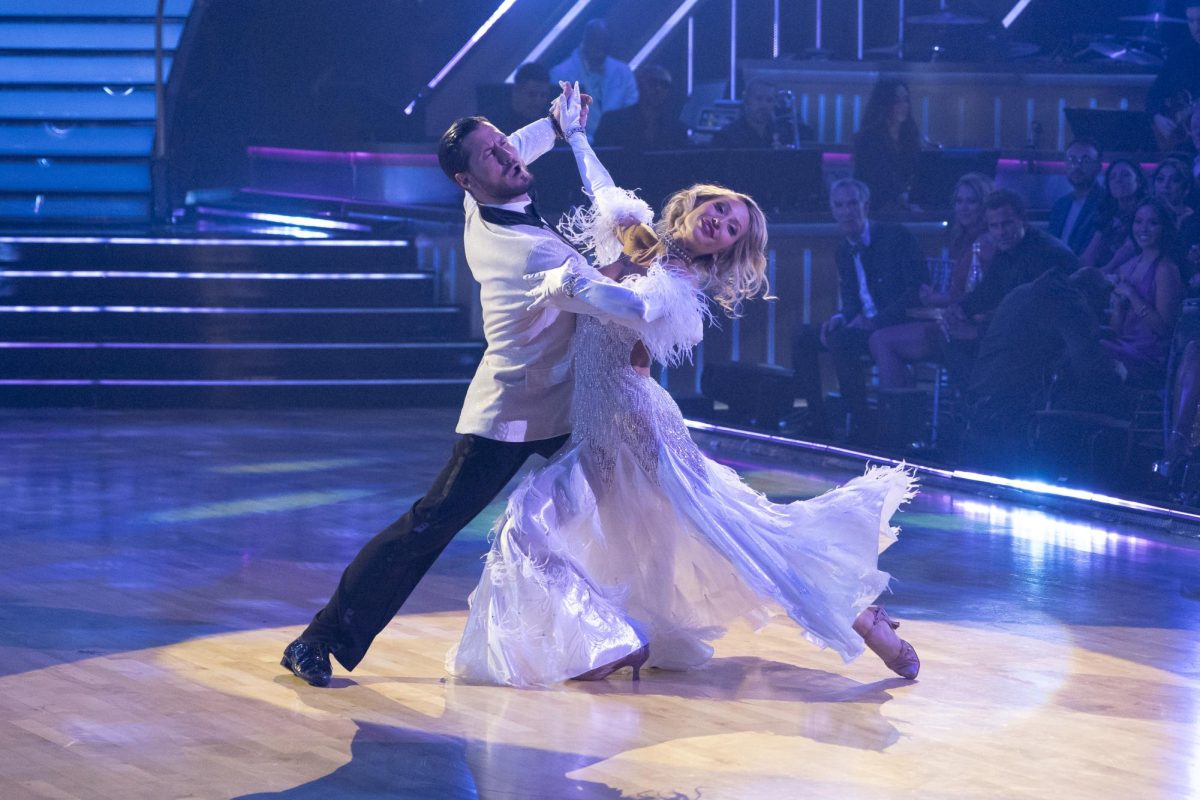

Senior Addison Nemec sits down on a Tuesday night, counting down the minutes until the live taping of “Dancing with the Stars,” begins. As the episode starts and the show goes on, more and more contestants receive nines and 10’s. The excitement of this score wears off, and by the end of the night, there is barely any room for improvement next week, leaving Nemec less eager to continue watching the season.
The scoring format for DWTS gives judges and viewers an equal sway on who stays or goes home, but every season there is a turning point in the scoring after the first 10 is received. Once the judges hand out the first 10, on this season it was for Whitney Leavitt’s “Wicked” Night performance, they tend to start giving them out regularly.
This gives the first 10 of the season a lot more meaning to the number.
On last week’s episode of DWTS, the remaining contestants were split into two groups to perform alongside the co-hosts. Team Kool, featuring contestants Andy Richter, Robert Irwin, Alix Earle, Elaine Hendrix and co-host Julianne Hough, received two 10’s and two nines as their score after being critiqued much more heavily than Team Chicago, featuring contestants Danielle Fishel, Jordan Chiles, Whitney Leavitt, Dylan Efron and co-host Alfonso Ribeiro, which received four 10’s.
These were not the first perfect and near perfect scores given out this season, in fact many contestants received extremely high scores that average a nine from each judge. These group performances, however, showcase how the first 10 impacts the rest of the season.
Only two weeks before this episode aired, “Wicked” Night aired which opened the door to giving 10s, but not all of the acts necessarily deserved this score.
Getting a 10 is supposed to mean that the performance was absolutely perfect, but when they hand out so many it is hard to tell what the judges thought was really good vs what they thought was perfect. And for some fans this can impact the way they vote for the contestants as well.
The repetitiveness of the scores can come across as a bias to a lot of the viewers because some of the favorites of the season, specifically Chiles and Richter, aren’t getting a near perfect score every episode like most contestants are.
“I think it’s super biased, the judges are favoring contestants over others,” said Nemec. “It’s not accurate.”
The judges set a minimum for scoring without realizing it because the dances are bound to get better every week. For someone like Earle, who has received at least one 10 for the past three weeks, it sets a standard that the judges will vote leaving little room to grow on the leaderboard.
This has given the middle of the season a kind of plateau because the leaderboard isn’t changing much and people are getting almost the same scores every week.
This isn’t to say that the contestants didn’t deserve a high score, many of them did. But when the judges give them such high scores so early in the season, it makes it difficult for the audience and the contestant themself to see how their dancing skill grows.
At this point in the season, getting a 10 means much less than it did a few weeks ago, yet a majority of the contestants have received this score from one of the judges. But it doesn’t leave much room to showcase their improvement in the weeks leading up to the finale.