


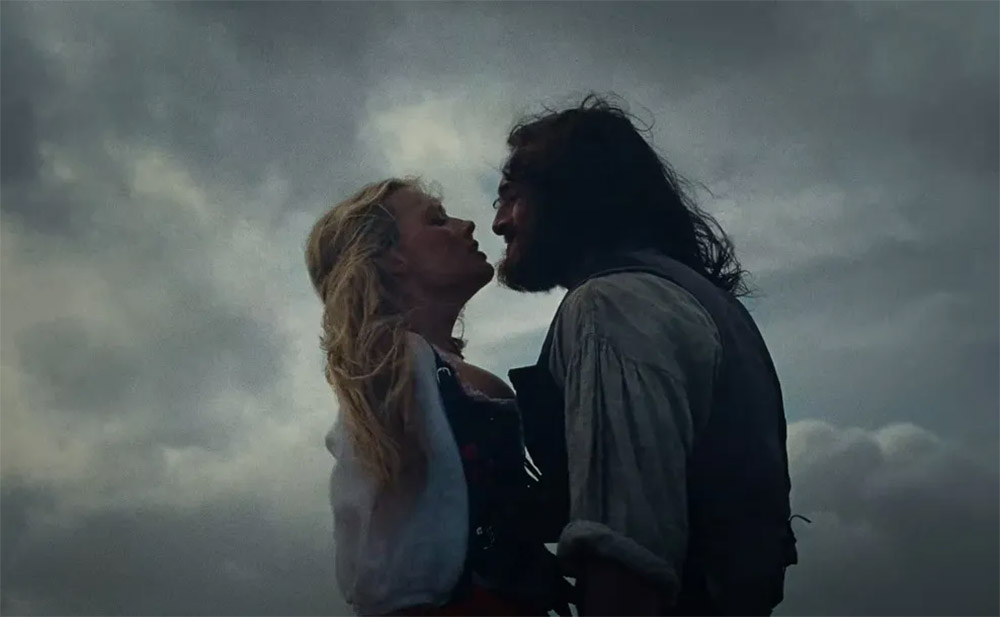

Emily Brontë’s novel, Wuthering Heights, which was published in 1847, has been a classic novel that many generations have enjoyed.
Whether people read it for a class assignment or for their own enjoyment, we can all agree that it is a story about generation abuse, societal expectations and tragic romance.
The 2026 movie adaptation which stars Jacob Elordi and Margot Robbie was released on Feb. 11. According to Box Office Mojo, since the release, the box office is at $191,793,628 worldwide.
When this book was adapted to a movie, however, some viewers were left unsatisfied.
Many of them casted their opinions on Threads.
“One injustice that I did not expect was reducing Isabella to a sycophant,” Lauren Day writes. “Who was complicit and even found joy in her abuse and degradation.”
“I am still perplexed at the choice of a 35 year old woman to play a character who dies by the time she is 18/19,” writes Sarah Murphy. “Her youth, immaturity, her inability to consider the consequences of her actions are central to Catherine Earnshaw.”
Doctor Ashley Diedrich, English teacher at MCHS, explains that she struggles with all movie adaptations because they are never 100% accurate.
“I feel like regardless if it’s something that is politically or even just socially relevant,” Dr. Diedrich starts, “I struggle with when we can’t properly adapt book to film.”
One of the main complaints viewers had of this movie was the fact that Heathcliff was played by a white actor.
In the book, Heathcliff being a “gypsy” was a crucial point in Heathcliff’s story.
“It says repeatedly in the book,” writes Bri Stokes, “that he’s a person of color, which ultimately explains why he’s been ostracised by society.”
Dr. Diedrich adds on to this idea that race was crucial in Heathcliff’s story.
“Especially, yes, now when our world and country’s climate can be very tumultuous,” Dr. starts, “I do feel it’s always important to represent any kind of art in its most appropriate and realistic fashion in terms of how it was originally addressed.”