


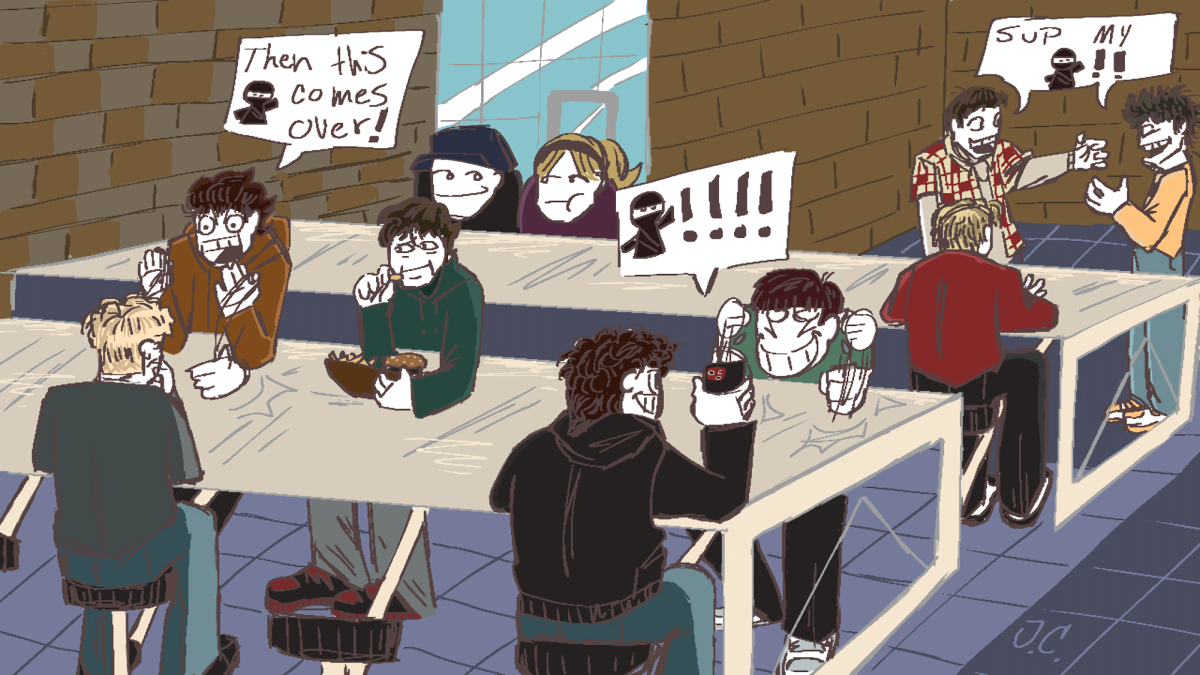

When a student is minding their own business, overhears one of their peers talking to their friend. However, they overheard one of them call the friend an offensive slur to get their attention. They considered going to their counselor to talk about how their peers were saying something offensive, but then ended up not doing it because of how often people use slurs.
As the use of social media gets popular, so does the use of slurs. Over time, these slurs lose their deep-rooted meaning and become desensitized. Because of this, it can cause harm to many people and can be considered verbal abuse.
Slurs have always been used in a derogatory way; the usage of slurs is not used with that intent as often as it used to. Many people use offensive terms such as, “nicknames,” or something along those lines. According to the University of California, Berkeley News, there has been a rise in hate speech on the platform X.
“A new analysis has found that weekly rates of hate speech on the social media platform X rose about 50% in the months after its purchase in October 2022 by Elon Musk, and that the number of bots and bot-like accounts did not decrease,” a staff writer at CBS, Kara Manke says, “despite Musk’s earlier pledge to reduce bot activity.”
Due to the increase in hate speech on many social media platforms, these offensive slurs can lead many people to believe that the usage can be alright, depending on how it’s used. However, there are many people who believe that no matter how it is used, it can still be harmful to many students and people.
“I think because in social media,” the dean for sophomores, Meghan O’Neil says, “it’s become … acceptable for people to say these things, that a lot of people think that it’s okay when it’s not.”
O’Neil continues to explain why slurs are offensive and dehumanizing, no matter the context.
“I think the biggest piece that I think should be conveyed to students, if at all possible, is that, like these words are violent,” O’Neil says. “They cause harm that you can’t see. They make people feel like they’re unsafe in a place that should be safe, and they make people feel like they might be harmed in a place that should be safe.”
“So I’m really hoping that students will start to think about, you know, the verbiage that they’re using,” O’Neil continues. “And clearly, there are different ways to get your friend’s attention than using a historically, you know, horrible word that indicates slavery and all kinds of dehumanization.”
Not many people know how uncomfortable slurs make others feel; most people feel uneasy and unsafe in an environment that is supposed to make them feel safe.
“I hear people say slurs constantly,” Junior at MCHS, Sarah Zawedde says, “thankfully, I’m in higher-level classes where it is quickly shot down by others if there are any. But in the hallways, it is much different; I hear them constantly in every passing period. Especially during lunch, it’s absurd. After one year of being in a regular math class and a popular elective in my freshman year, I decided to go into honors and a less taken elective just so I wouldn’t have to hear what some people were saying daily.”