


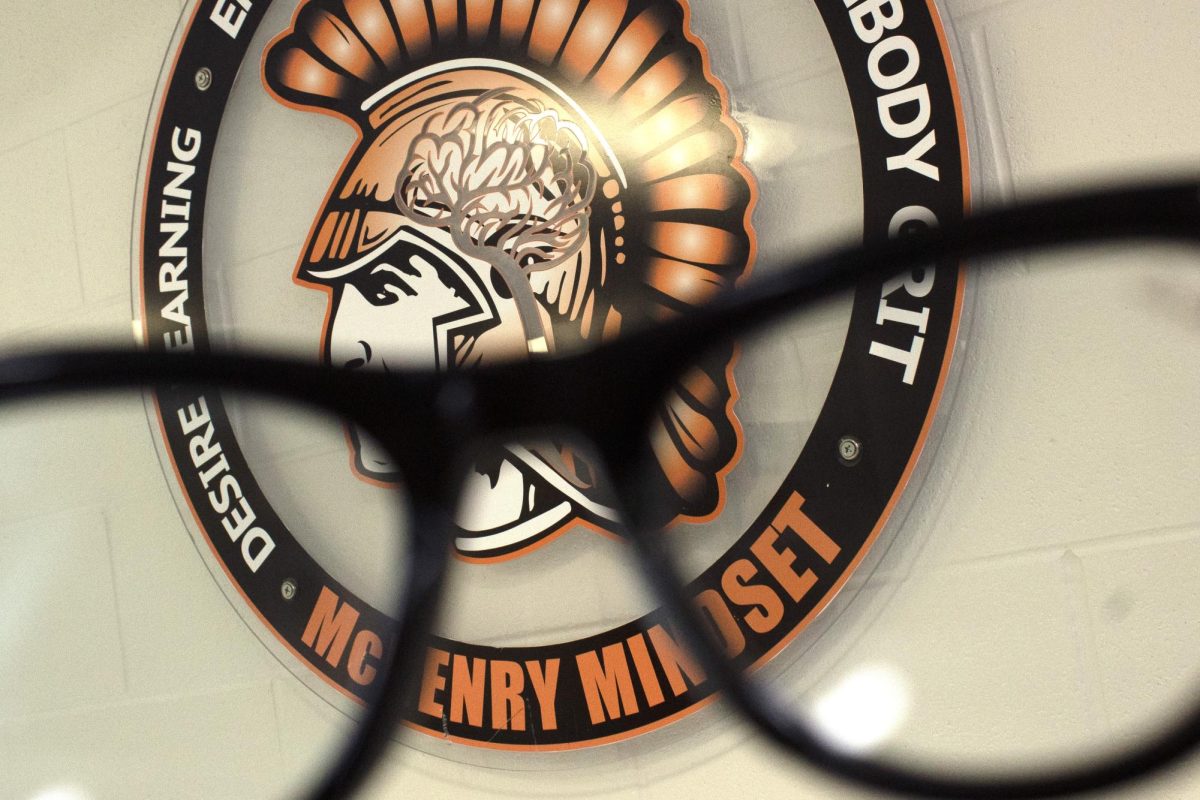

During their Spanish exam, an MCHS student sits at their desk, staring at their paper, stuck on a question. Lost, the student thinks and thinks, they eye the problem and mumble, “hey Meta, translate to English.”
On Sep. 30, 2025, Meta released their smart glasses, the ‘Meta Ray-Ban Display,’ including the ‘Neural Band’ for gesture control, priced together at $799. They feature an integrated display for notifications and AI interaction, marking a significant step in Meta’s AI hardware.
Meta plans for international expansion in early 2026, facing delays due to high demand. They are available at Best Buy, DICK’S, LensCrafters, Sunglass Hut, Ray-Ban Stores and Verizon. There are many different versions, and they are all gaining traction, so much so that the AI glasses have grown so popular that they’ve reached MCHS.
“I honestly feel like it’s for the better that they aren’t allowed here,” AI glasses owner Oscar Levesque says, “because they’re super easy to cheat with stuff like homework and quizzes.”
At MCHS, adminstration suddenly created a new handbook policy titled, “MCHS Approach on AI Glasses.” Expectations pertaining to AI Glasses are similar to the ones MCHS has for cellular devices, like no AI wearables in classrooms or during instructional times, no recording audio or video, and no using AI to complete assignments.
“The school has been more and more strict about Meta glasses as time goes on,” Levesque says, “but most noticeably in P.E. classes.”
Every student taking a physical education class was made aware that devices and AI glasses in restrooms and locker rooms are strictly prohibited because they are “private spaces.”
“Please be advised that if an AI device is brought to school and misused,” the MCHS P.E. department says in their syllabus, “possible outcomes include loss of device privileges, temporary confiscation, disciplinary action and academic consequences if the misuse involves cheating.”
Since their October 2023 launch, Meta’s Ray-Ban smart glasses have sold over two million units, with one million sold just in 2024. Production is aiming for 10 million units annually by late 2026.
“They’ll definitely become more popular as years go by,” AI glasses owner, Jared Navas says, “especially because they’ll get more advanced as technology and opportunity grow.”
Between excitement for the technology’s growth and concerns over privacy, many have mixed opinions on the AI glasses.
“Right now in education, I think there’s a new technology so similar to that of a cell phone in terms of the ability to record other students.” Strength coach John Beerbower says. “And I think that I can just speak for physical education, you don’t want to have a situation where kids wear those in a locker room and could be potentially taking pictures or videos of other students in their presence with those on.”
As the glasses are a revolutionary and very cool product, the risk is just higher than the reward.
“If they get to the point where they can show that there’s an educational benefit for a kid that has them on, then they might be more open to allowing them,” Beerbower says, “at times, maybe using them for an activity in the classroom.”
As the student copies down the answers from their AI glasses onto their assessment, they glance around, then smile, feeling a spark of hope. Quietly, they say, “Okay, Hey Meta, translate again.” The translation appears right away, clear and easy to understand. Answering questions becomes easy, and good grades come even easier. But they think, “Is this really the best usage of this technology?”