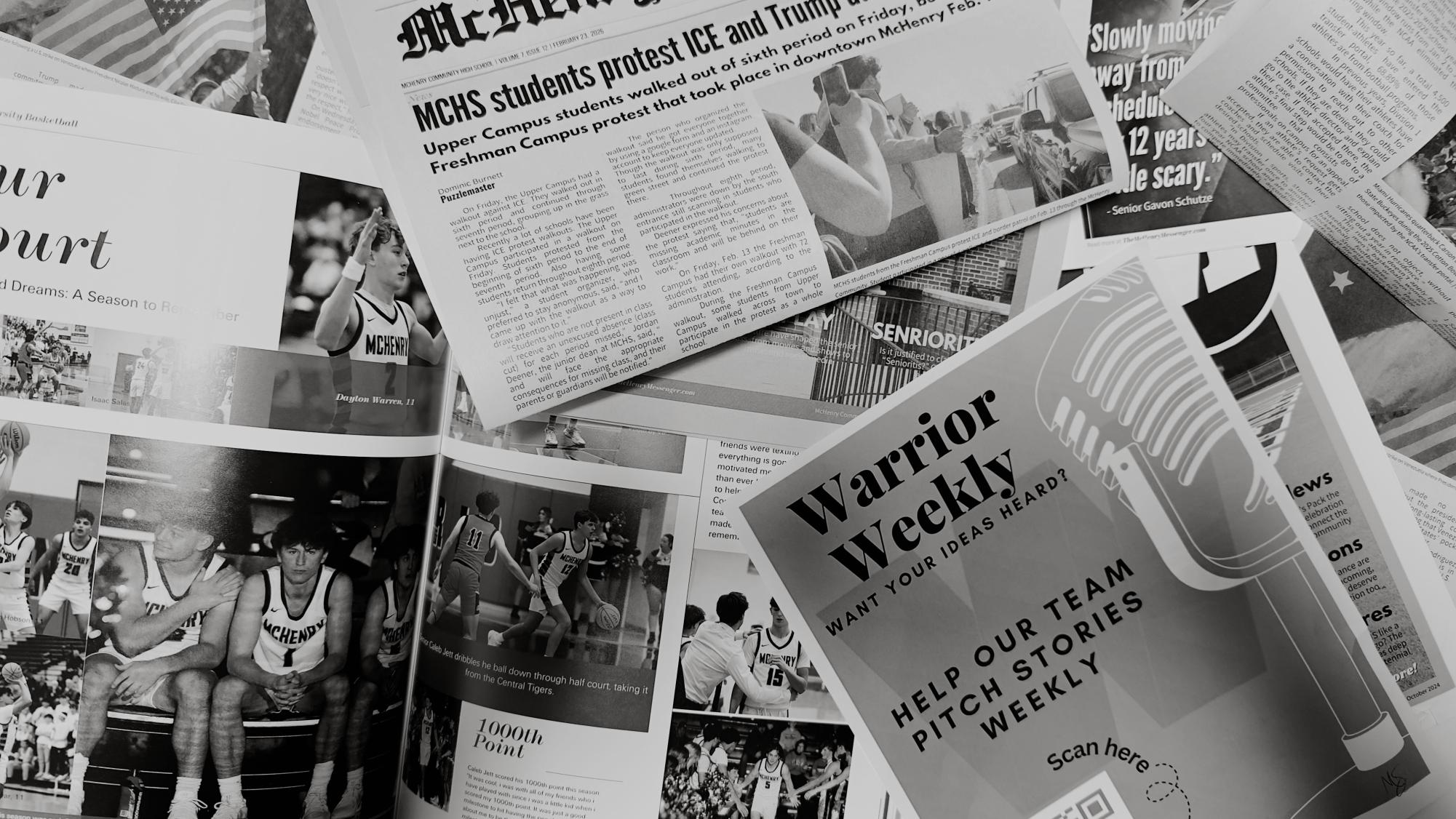

Behind every headline is a right many students don’t believe they have, the freedom to report, ask questions and tell the truth. On Feb. 26, 2026 schools across the country recognize Student Press Freedom Day, a national day dedicated to celebrating and defending the rights of student journalists.
Student Press Freedom Day was launched by the Student Press Law Center in 2019 to raise awareness about the challenges student journalists face and to advocate for stronger protections. The day is observed by journalism programs, media organizations and schools nationwide.
“Student Press Freedom Day is a call to show up,” the Student Press Law Center states on its website. “It will take all of us—students, educators, advocates and community members alike—to ensure student journalists have the protections they need to continue their critical work.”
These protections trace back to one powerful sentence written more than 200 years ago. The First amendment to the United States Constitution declares that, “congress shall make no law…abridging the freedom of speech, or of the press.”
This amendment was ratified in 1791 as part of the United States Bill of Rights, the amendment guarantees freedoms of religion, speech, press, assembly and petition.
However, student journalists have not always been granted full First Amendment protections. In 1988, the U.S. The Supreme Court ruled in Hazelwood School District v. Kuhlmeier that public school administrators could exercise editorial control over school-sponsored publications if their actions were “reasonably related to legitimate pedagogical concerns.” This decision limited student press freedom nationwide.
“The Court held that schools must be able to set high standards for student speech disseminated under their auspices,” Oyez states, “and that schools retained the right to refuse to sponsor speech that was “inconsistent with ‘the shared values of a civilized social order.'” Educators did not offend the First Amendment by exercising editorial control over the content of student speech so long as their actions were “reasonably related to legitimate pedagogical concerns.”
Since Hazelwood, advocates have worked to restore stronger protection. According to the Student Press Law Center, “New Voices” legislation in several states have been introduced to protect student journalists from censorship. “New Voices is a student-powered nonpartisan grassroots movement of state-based activists who seek to protect student press freedom with state laws.”
Illinois is one of those states. In 2016, Illinois passed the Speech Rights of Student Journalist Act, often referred to as the “New Voices” law. “The Speech Rights of Student Journalists Act protects the press freedom of Illinois’s public school student journalists. The law says that student media cannot be censored except in certain narrow circumstances,” states the Student Press Law Center website.
The act protects student journalists’ rights to determine the content of their school-sponsored media, limiting prior review and censorship by school officials except in specific circumstances such as libel, slander or disruption.
Under Illinois law, student media advisers also cannot be punished for supporting their students’ lawful expression, strengthening protections for both reporters and educators.
“Student press freedom, to me,” Broadcast and English Teacher, John Aubert says, “means exploring more nuanced topics for students, without the ability to be scrutinized, or punished.”
Understanding scholastic press rights means recognizing both freedom and responsibility. Student journalists must avoid libel, respect privacy laws and follow ethical guidelines, but they also have the authority to report on issues that matter, even when those issues are uncomfortable.
“That’s what it means to me,” Aubert says. “To have students to have the confidence to discuss things that might be uncomfortable, be trusted in that aspect, to bring up those things and be responsible enough to speak on them.”
Student Press Freedom Day is more than a calendar date. It is a reminder that the stories printed in hallways and published online are not just assignments, they are exercises in democracy.
Every headline written by a student is proof that the First Amendment is not just history in a textbook. It is alive in classrooms, in interviews, in late-night editing sessions. And on Feb. 26, that right, to ask, to write, to publish, is worth celebrating.